
Beyond the Check-In: A Smarter Approach to Geofencing for Field Teams

For field teams, knowing a rep visited a location is useful. Knowing where they were, when they arrived and how long they stayed is far more valuable.
Traditionally, that visibility has depended on manual check-ins. A rep arrives, opens an app and starts a visit. When the work is complete, they end it.
But across hundreds or thousands of visits, small inconsistencies add up. A rep checks in late, forgets to end a visit or checks in near a customer location without enough precision to confirm exactly where they were.
The result? Field data that may not tell the full story. Geofencing offers a different approach.
What Is Geofencing?
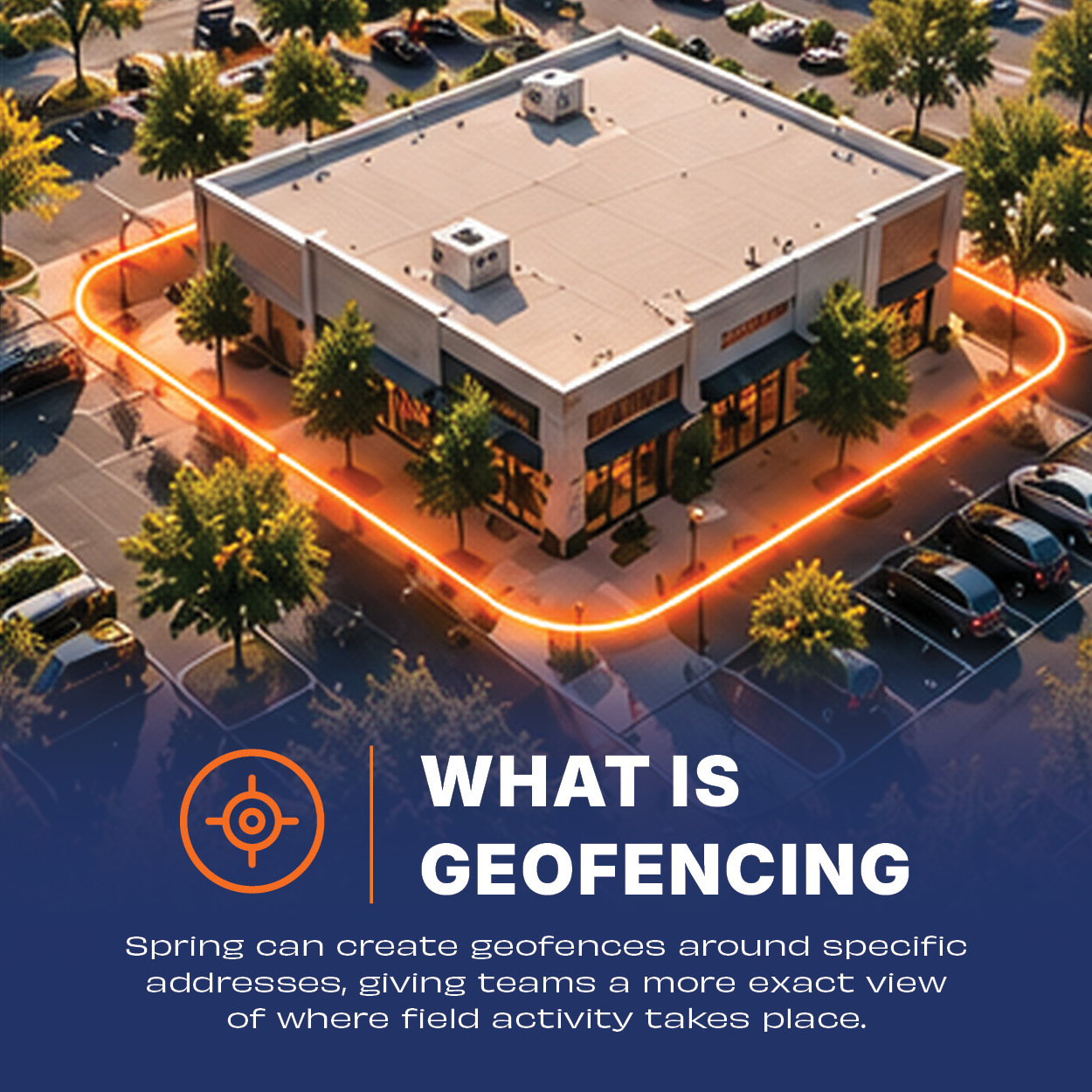
Geofencing creates a virtual boundary around a physical location, allowing a system to recognize when a mobile device enters or exits that defined area.
For field organizations, this can reduce reliance on manual check-ins while providing more reliable visibility into activity across territories.
Spring can create geofences around specific customer addresses, giving teams a more granular view of where field activity takes place.
And in dense markets, that precision matters.
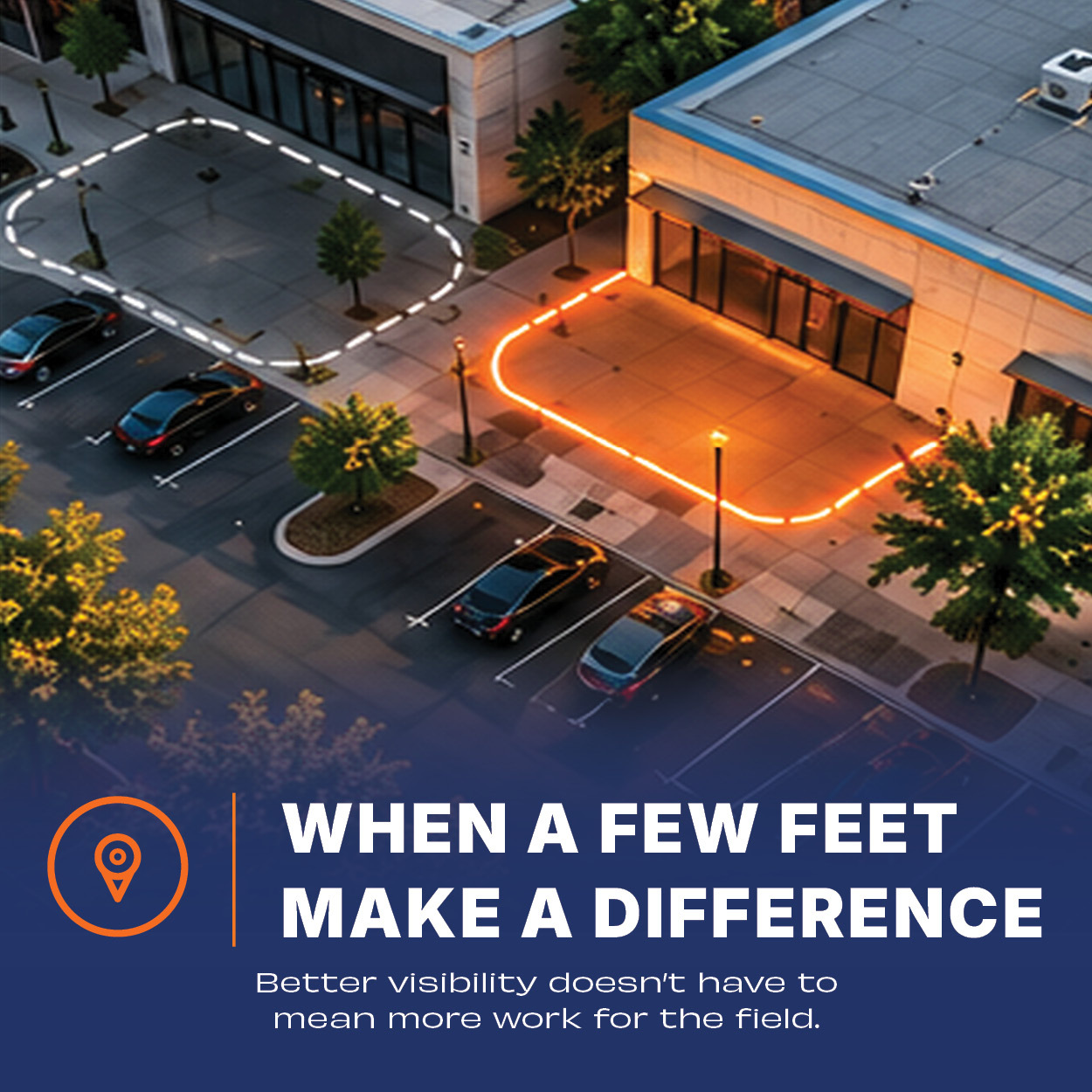
When a Few Feet Make a Difference.
Think about Manhattan, where customer locations can sit incredibly close together.
A broad location radius may show that a rep is in the right general area. Address-level geofencing can provide a much more precise view.
With Spring, smaller boundaries can be created around individual customer locations. Entry and exit events can then be captured as a rep moves in and out of that defined area—without adding another manual start or finish action to their day.
Teams gain greater visibility into:
- When a rep arrived and left
- How much time was spent on site
- Whether activity was tied to the correct customer location
This is especially valuable for organizations managing hourly merchandisers and other high-volume field teams. Their focus should be on the work happening in the store, not creating a perfect record of every arrival and departure.
For managers, that can mean greater confidence in visit data. For reps, fewer administrative steps. Better visibility doesn’t have to mean more work for the field.
Better Visibility. Less Manual Work.
Field teams don’t need another task added to their day. Spring’s approach to geofencing can provide more precise location intelligence, less reliance on manual reporting and a clearer view of what’s happening across the field.
Because knowing a visit happened is only the beginning. Knowing where, when and for how long gives teams information they can act on.
Want to see how Spring can bring greater visibility to your field operations?
Want to learn even more on Geofencing?
Read Geofencing in Action: Accuracy Without the Extra Step
For Red Bull, Spring’s geofencing capabilities can create precise fences around individual customer addresses. As a driver enters or leaves the location, those events can be captured automatically without relying on someone to manually start and finish a visit.
That creates a clearer, more reliable view of field activity: It’s a simple shift with a meaningful impact: less reliance on manual reporting and a clearer understanding of what’s happening in the field.
All resources